
Most travelers to the South of Sri Lanka never make it past the golden beaches of Mirissa, the historic walls of Galle Fort, or the crowded safari tracks of Yala National Park. While these icons are famous for a reason, they only scratch the surface of the island’s southern soul. For those who venture just a few miles inland, a world of ancient temples, misty peaks, and primary rainforest awaits—far from the tourist crowds. This guide takes you through the “hidden” South: a journey from the cloud-shrouded heights of Gongala and the cascading waterfalls of Deniyaya, to the silent, moonlit turtle sands of Rekawa. You’ll discover there are so much more things to do in Southern Sri Lanka than most travellers ever realise.
In this article
Agricultural Heartbeat: A Journey Through the Soil
Before you reach the salt spray of the coast, you must understand the soil. The southern interior is a patchwork of emerald green, where the climate creates a perfect “bio-corridor” for some of the world’s most prized exports. A visit to a working estate isn’t just a tour; it is a rare look at the human skill that has powered this island for centuries.
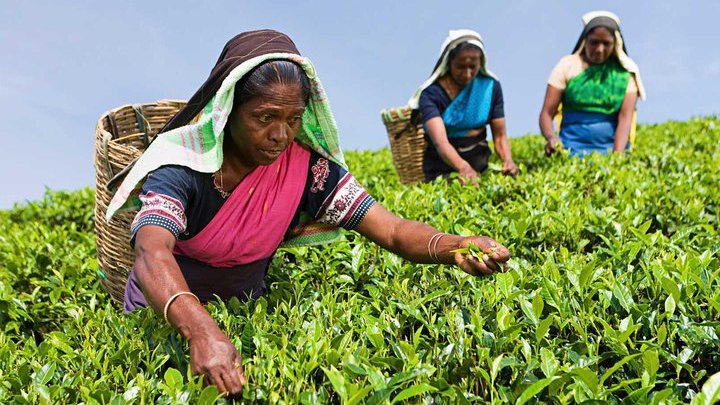
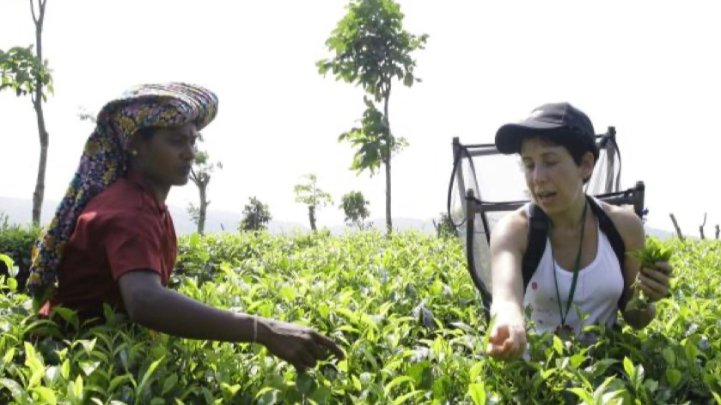
As you wander through a southern tea estate, the air feels crisp and carries a faint, herbal sweetness. You will see the “tea pluckers” moving through the bushes with rhythmic speed. This is a masterclass in selection; they look only for the “two leaves and a bud”—the freshest growth that holds the highest concentration of flavour and antioxidants. Despite modern technology, no machine can replicate the delicacy of a human hand in identifying the perfect leaf. It is a practice that has remained unchanged for over a century, preserving the quality that makes Ceylon Tea a global gold standard.
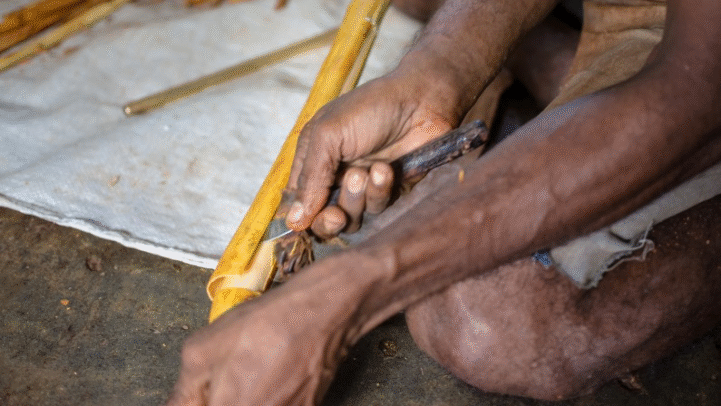
Sri Lanka provides nearly 90% of the world’s “true” cinnamon (Cinnamomum zeylanicum), and the south is its ancestral home. Observe the cinnamon peeling process—a craft passed down through families like a secret language. You will see artisans skillfully scraping the outer bark and then using a specialized tool to rub the inner bark until it loosens. Watch as they hand-roll these thin, parchment-like layers into “quills,” filling the centers with smaller trimmings to create a uniform cigar-like shape. The precision required to roll a perfect quill with incredible consistency is a mesmerizing display of artisanal heritage.
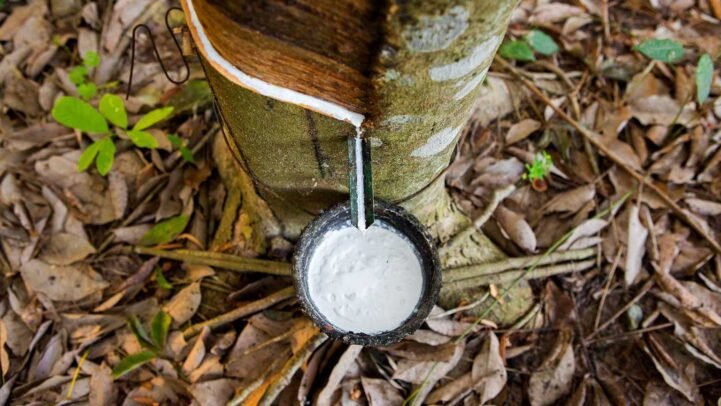
In the quiet, cool hours before dawn, the rubber estates come alive. Rubber tapping is a delicate operation. You will see the tapper make a precise, spiral incision in the bark of the Hevea brasiliensis tree. It requires a steady hand; the cut must be deep enough to reach the latex vessels but shallow enough to avoid harming the “cambium” (the tree’s living heart). Watch as the milky-white latex begins to flow, guided into coconut shells attached to the trunk. It is a silent, patient process that captures the very lifeblood of the estate.
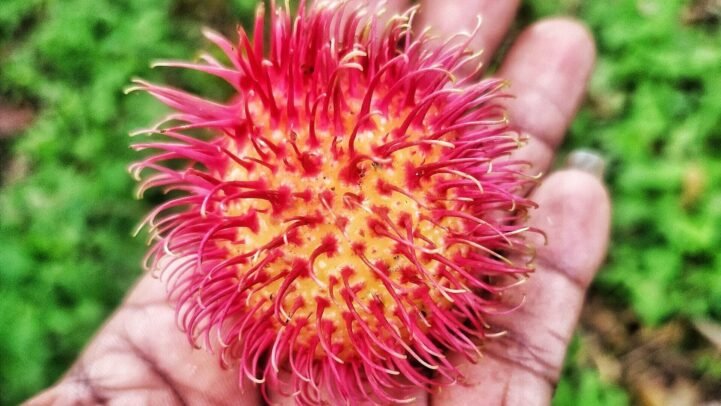
The rich, humid microclimate of the southern foothills allows a diverse array of fruit crops to thrive. Look beneath the fruit trees to find the “secondary layer” of the estate—black pepper vines climbing the trunks and turmeric plants shading the soil. It is a perfect example of traditional intercropping, where every inch of the land is a productive, self-sustaining ecosystem. Walk through groves where heavy Alphonso and Karthacolomban mangoes hang low, and discover exotic varieties like the Rambutan with its hairy red skin, the creamy Mangosteen (the “Queen of Fruits”), and the pungent, prized Durian.
Elamaldeniya Temple: Spiritual Silence
While coastal temples often draw large crowds, Elamaldeniya Raja Maha Viharaya remains a sanctuary for those seeking the “silent” side of Sri Lankan spirituality. Tucked away from the bustling main roads, this temple is a masterpiece of Kandyan-style artistry set against a rugged, ancient landscape. The temple is attributed to King Saddhatissa (2nd Century BC), who established the site while he was a prince ruling the ancient Rohana Kingdom.
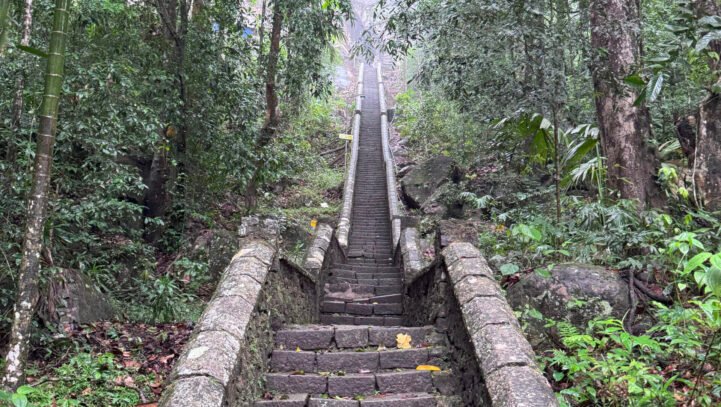
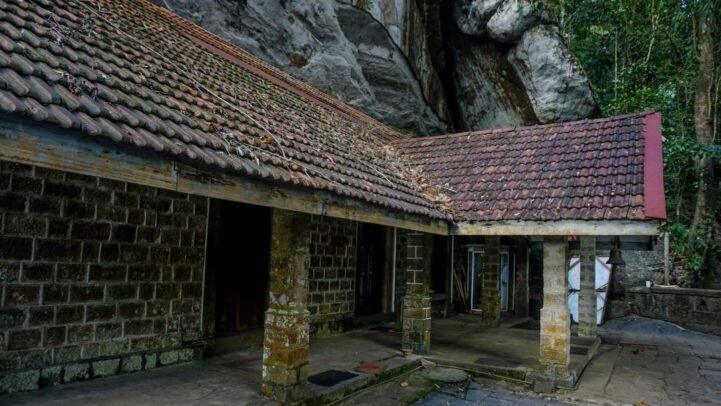
The experience of Elamaldeniya is defined by its unique geography. Upon arriving, you aren’t immediately at the shrine; instead, you are greeted by the sight of the white Chaithya (Stupa) perched on a distant mountaintop. To reach the sacred areas, you must embark on a physical journey: You begin by descending over 200 well-laid granite steps that lead to the valley floor.The stones are weathered by centuries of pilgrims’ feet, leading you down to a refreshing natural stream that flows between two hills. After crossing the stream, the path turns upward. Another 200 granite steps lead you to the ancient image house, a cave temple built onto a natural rocky platform under a massive drip-ledged boulder.
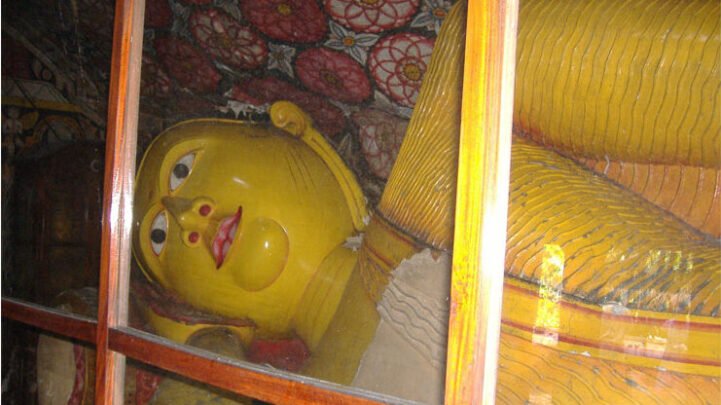
Inside the main Viharaya (Image House), the atmosphere shifts. The cave houses a majestic reclining Buddha statue in the state of Parinibbana. Look closely at the ceiling and pillars; the vibrant murals, painted with natural dyes, tell stories of the Jataka tales (previous lives of the Buddha). The level of detail—from the floral motifs to the expressions of the figures—rivals the more famous temples in Kandy, offering a rare look at the artistic revival of the Kandyan period in the south.
On one side of the cave platform stands the Dewalaya, dedicated to the deity Rajjuru Bandara. For locals, this is often the primary reason for their visit. Rajjuru Bandara is the most revered guardian deity of this region. You will see devotees making silent vows and lighting oil lamps here, a practice that feels deeply personal and entirely uncommercialized. Nearby, look for a natural water drip coming directly from the rock face into a small tank—a “miracle” of the mountain that has provided water to the temple for millennia.
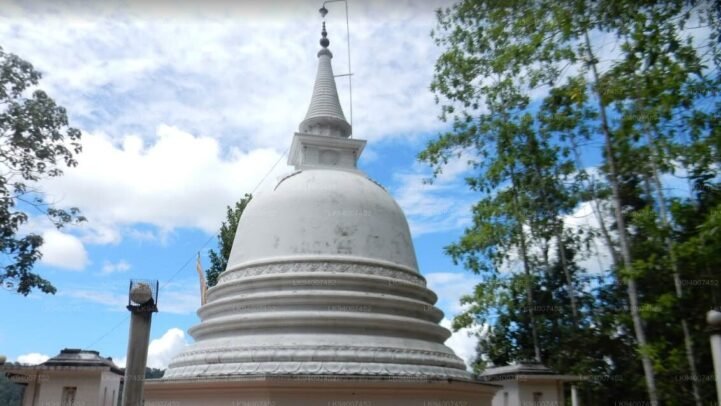
After paying respects at the cave temple and the Dewalaya of Rajjuru Bandara, the journey reaches its spiritual and physical climax. A final path of stone steps leads upward from the rock platform toward the highest point of the temple grounds, the Chaithya (Stupa). The Stupa itself stands as a beacon of serenity. It is a classic, minimalist structure, painted a brilliant white that contrasts sharply against the deep blue sky. Walking the ritual circle (Pradakshina) around the base of the Stupa at this height feels like being suspended between the earth and the sky.
Sinharaja: Journey into the Primeval Heart of the South
Sinharaja is more than just a UNESCO World Heritage site; it is a living relic of Gondwanaland, offering a glimpse of what the island looked like millions of years ago. For those who want to see the “authentic” South, this is the ultimate destination.
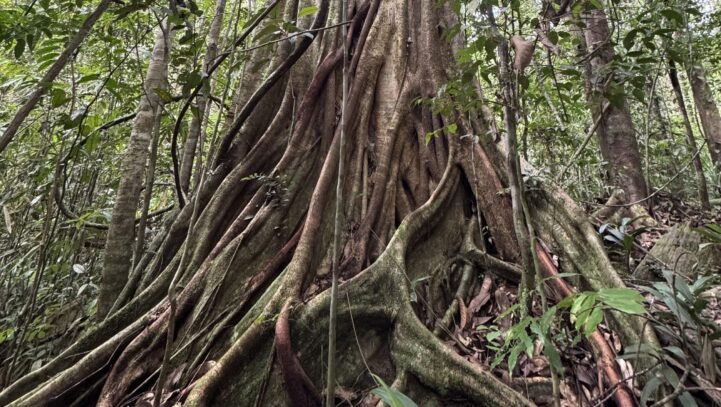
As you walk in the jungle, you are surrounded by an incredible density of life. Over 60% of the trees here are endemic, and many belong to the Dipterocarpaceae family. Look up to see the towering Hora trees and the massive Na (Ironwood), whose young leaves emerge as vibrant red before turning deep green. Beneath the giant dipterocarps, the humid floor is a treasure trove for botany enthusiasts. You will find rare orchids and a variety of carnivorous pitcher plants hanging near the marshy edges. Thick, twisted lianas (woody vines) hang like natural ropes from the canopy, while giant tree ferns remind you of a prehistoric era.
Beyond the iconic Sri Lanka Blue Magpie with its striking chestnut wings and blue body, listen for the deep call of the Red-faced Malkoha, a bird that hides in the dense creepers. The birdlife in Sinharaja is world-famous for its “Mixed-Species Feeding Flocks.” This is a unique phenomenon where different species travel together through the canopy to hunt for insects. In a single “flock,” you might witness the Greater Racket-tailed Drongo leading the group, followed by the Orange-billed Babbler and the Sri Lanka Crested Drongo. Seeing 10 to 15 different species moving as one unit is a sight found nowhere else on Earth.
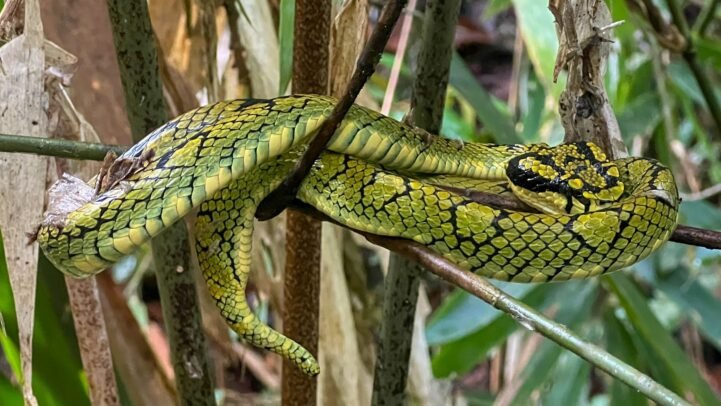
While the birds capture your eyes, the forest floor and undergrowth are alive with smaller, equally fascinating creatures. Look into the high branches for the Purple-faced Langur – the shy, endemic primate with its distinctive white beard. Sinharaja is a hotspot for herpetology. You may spot the Green Pit Viper camouflaged perfectly against the leaves or the Hump-nosed Lizard. After a rain, the forest floor comes alive with the calls of countless endemic frogs, some so small they live entirely within the water-filled hearts of tree holes. The air is often filled with the Birdwing Butterfly, the largest in Sri Lanka, its golden-and-black wings fluttering through the sun-dappled clearings.
The climb to the summit of Sinhagala (lion rock) is the heart of the Sinharaja experience. This isn’t a casual walk; it is a trek through the dense heart of the jungle. Upon reaching the rocky summit, the forest opens up to a breathtaking 360-degree view. You are standing above the “Green Sea,” looking out over a rolling canopy that stretches toward the horizon. It is a rare moment of absolute silence, broken only by the wind.
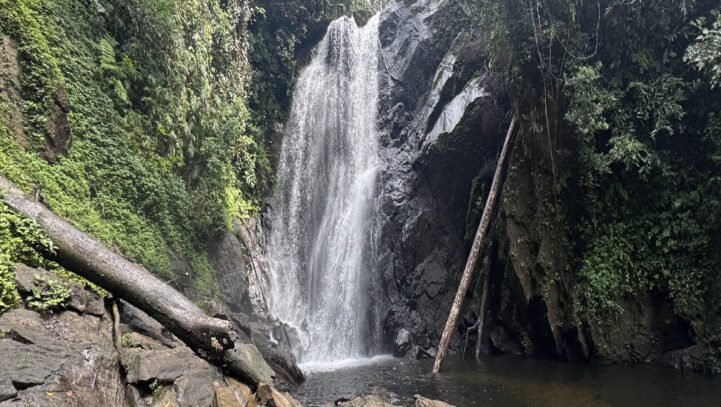
The forest is fed by countless hidden streams. As you trek, you will encounter waterfalls veiled in mist and foliage—like the stunning Duvili Ella. These are some of the most pristine waters in the country, and there is nothing quite like dipping your feet into a secluded natural pool after a few hours of trekking.
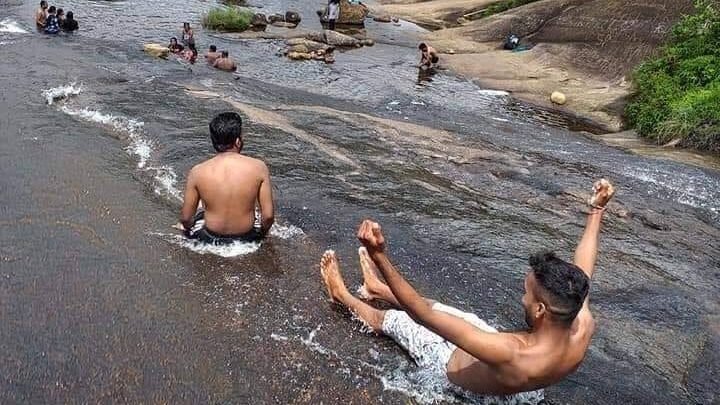
For a change of pace, the forest outskirts offer a natural playground. The surrounding rivers provide excellent white water rafting opportunities, where you can navigate the rapids while surrounded by the towering trees of the rainforest border. One of the most unique geological features in the region is the Patna Rock. Here, a natural, smooth rock surface meets a flowing stream, creating a perfectly safe, natural “water slide” into a pool below. It’s a moment of pure, mountain-fed fun that locals have enjoyed for generations.
Gongala: The High Point
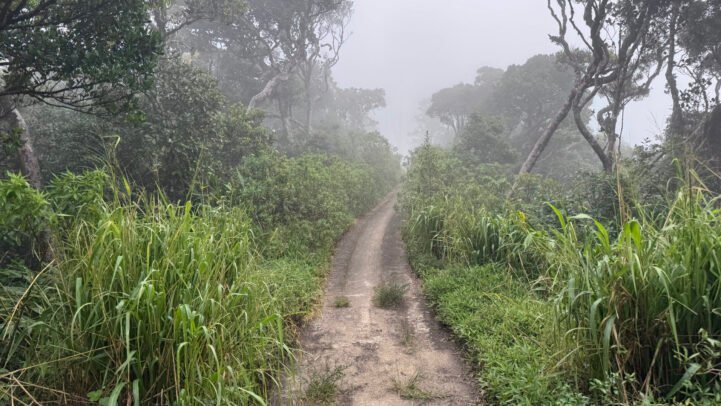
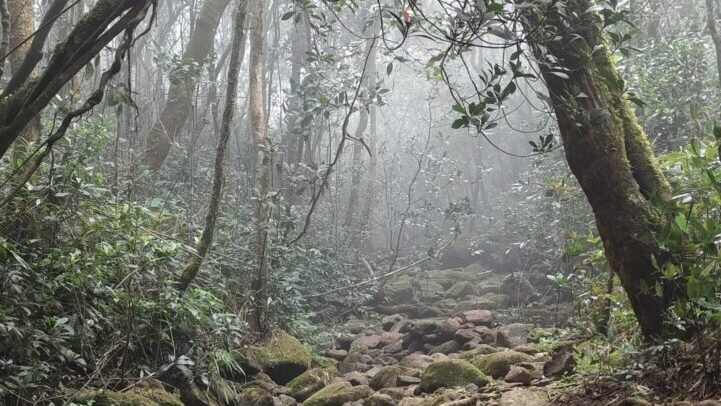
If Sinharaja is the heart of the jungle, Gongala is its watchtower. Located on the border of the Rakwana mountain range, this peak offers a landscape that feels more like the “Hill Country” of Nuwara Eliya than the Southern Province. Because of its height, Gongala features unique montane flora. You will see stunted trees covered in moss and “Old Man’s Beard” (lichen), along with wildflowers that only thrive in this specific misty microclimate.
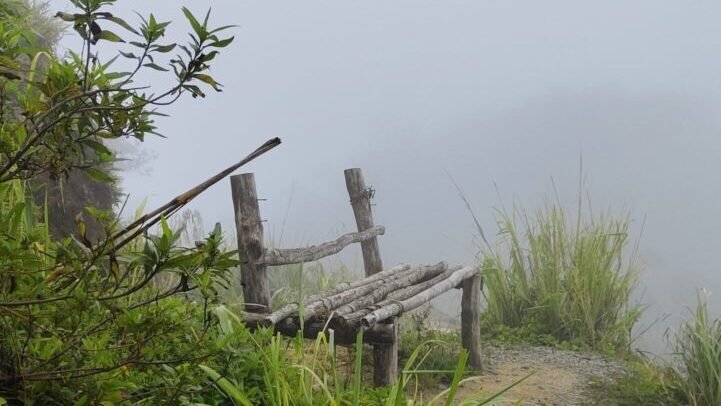
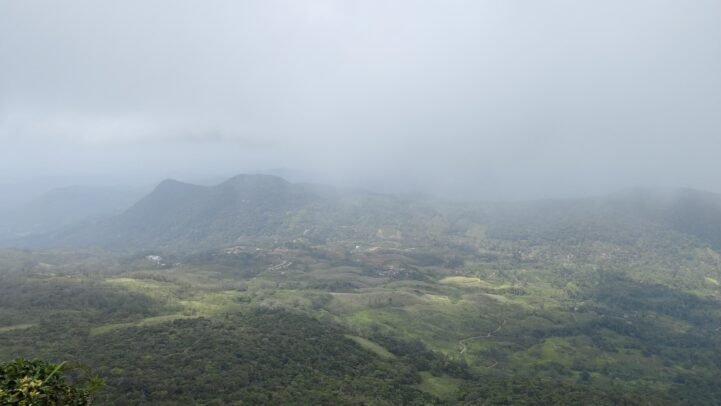
The journey to the top takes you through winding roads flanked by rolling tea estates. As you climb, the air grows noticeably cooler and the humidity of the rainforest gives way to a crisp, mountain breeze. On most mornings, the peak is swathed in a thick “sea of clouds,” which slowly clears to reveal the world below.
As the tallest peak of the Southern region, Gongala offers some of the most dramatic views in the Southern plains. On a clear day, the vista from the top is unmatched. To one side, you can look down into the deep, emerald expanse of the Sinharaja Rainforest canopy. On a clear day, you can see all the way to the southern coastline, where the land finally meets the Indian Ocean.
The Hidden Waters: A Private Dip in the Clouds
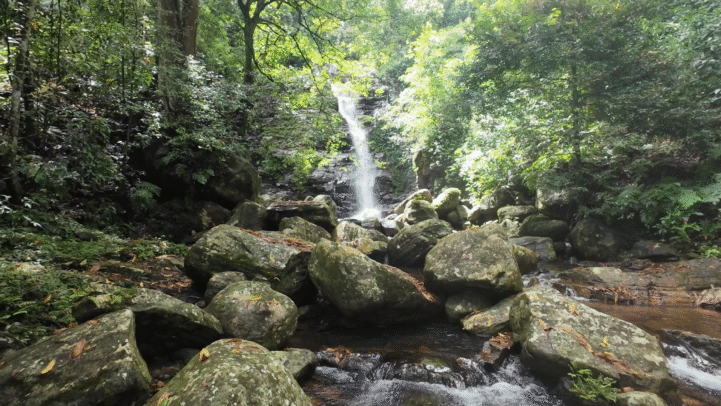
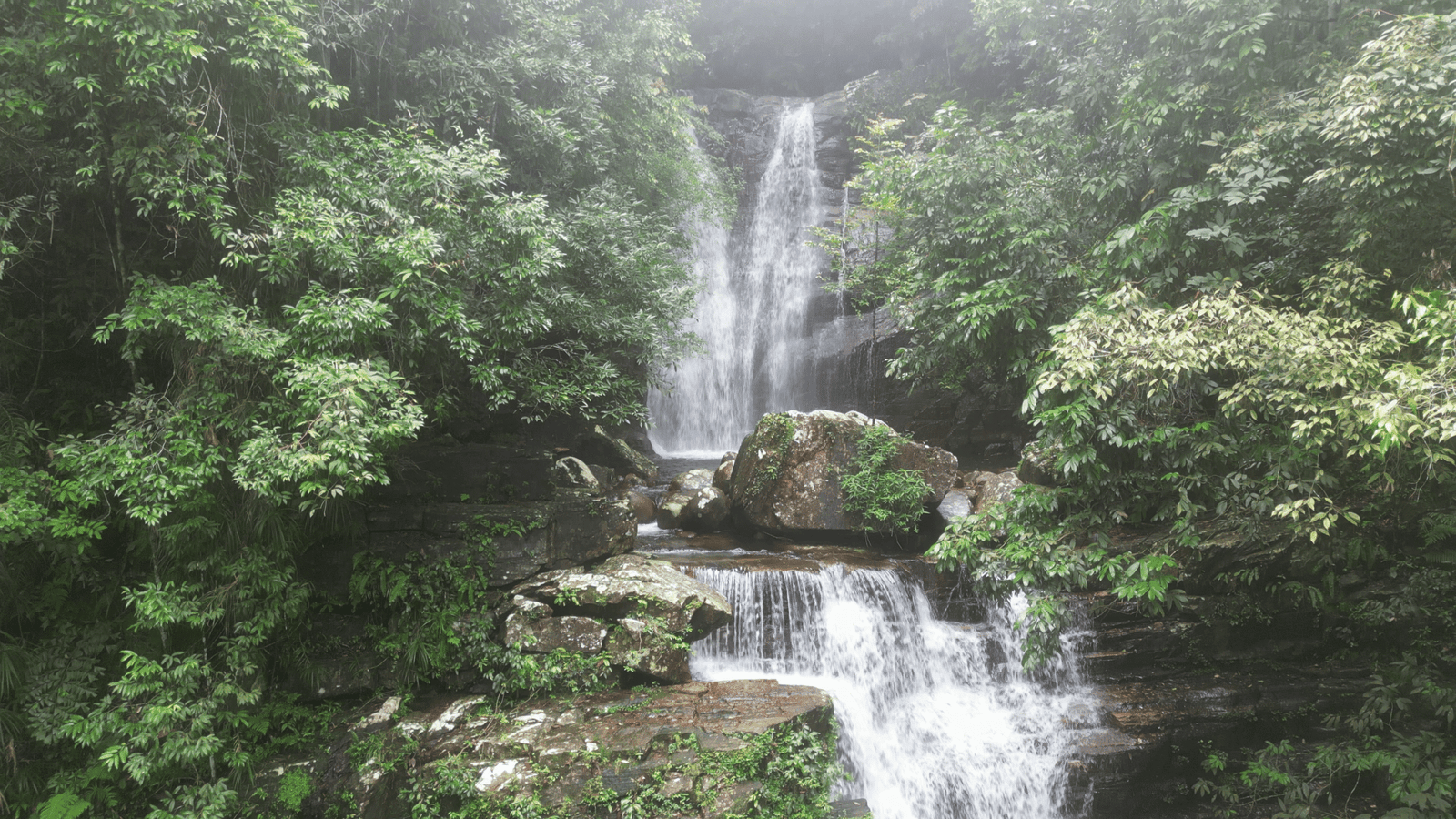
Tucked into the emerald folds of the Gongala range lies a collection of “secret” waterfalls that remain largely untouched by mainstream tourism. These are not the crowded landmarks found on every Instagram feed; they are the private sanctuaries of the mountain.
These falls are born from the pure, high-altitude springs of the Rakwana massif. Because the water originates from the mist-covered peaks above, it is exceptionally clear and carries a refreshing, crisp chill that is a welcome contrast to the tropical heat of the lowlands. Unlike the popular falls where “tour buses” are a common sight, these secluded spots offer absolute privacy. Often, the only sound you will hear is the rhythmic thunder of falling water echoing off the rock faces and the occasional sharp call of a mountain eagle circling above.
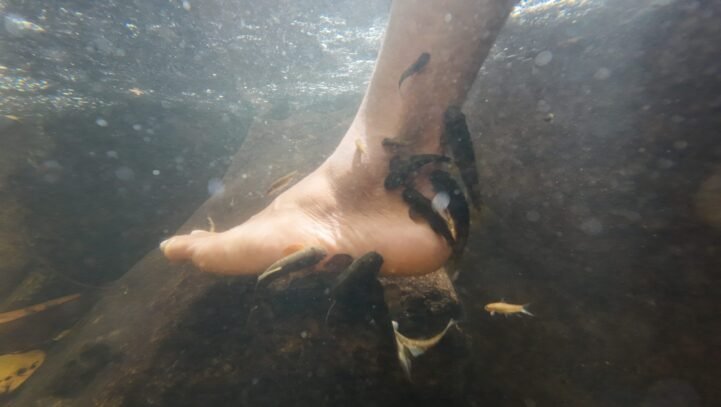
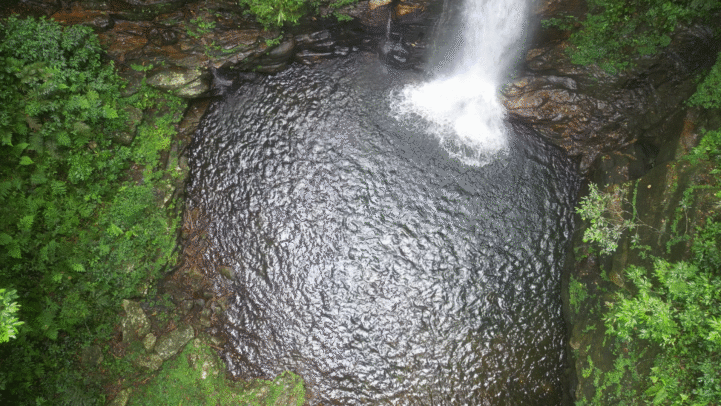
Many of these falls have natural pools creating perfect basins for a “private dip.” These are “slow travel” locations. There are no paved paths or viewing platforms. To reach them, you must follow the sound of the water through narrow trails, making the eventual discovery feel earned. It is a place to sit in silence, reconnect with nature, and experience the “silent side” of Southern Sri Lanka.
The Living Tea Experience: Hands-on in the Highlands
A visit to a Southern tea estate isn’t a passive tour; it is an invitation to step into a rhythm of life that has defined the island’s soul for over a century. It is about the transition from the sun-drenched fields to the aromatic shadows of the factory.
There is a profound humility in joining the tea pluckers among the emerald rows. As you step into the bushes with a traditional basket slung over your shoulder, you quickly realize that what looked like a simple task is actually a dance of incredible dexterity. You’ll learn to look for the “Two Leaves and a Bud”—the crown jewels of the bush. Under the patient guidance of women whose families have done this for generations, you’ll feel the snap of the tender stalks and the velvet texture of the fresh leaf. It is a moment of deep connection to the land, where the birdcalls of the foothills and the gentle chatter of the estate become the soundtrack to your morning.
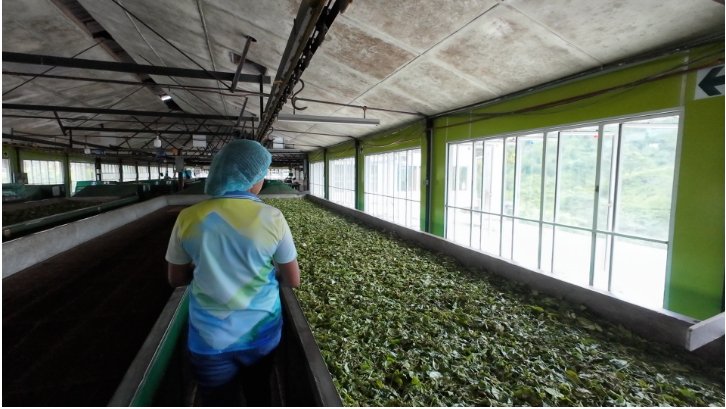
Walking into a tea factory is a sensory journey back in time. The air is heavy and intoxicating, thick with the scent of “withered” leaves—a fragrance that sits somewhere between a wildflower meadow and a spice market. Beneath the high, corrugated roofs, you’ll hear the rhythmic “thrum” of vintage British-engineered machinery, some of it over a century old. There is a beautiful, industrial honesty here; you’ll see the copper-colored leaves spread across cooling tables and watch the heavy brass rollers twist the leaves into their final, elegant shapes. It’s a place where history isn’t behind glass—it’s in the very air you breathe.
The journey concludes in the tasting room—a sanctuary of white porcelain and deep, burgundy-hued liquors. Tea tasting in Sri Lanka is as nuanced and prestigious as a wine tasting in Bordeaux. You will discover why the “Low-country” tea of the South is so prized; it is bolder, darker, and more “muscular” than its mountain cousins. Sipping a cup of tea you might have helped pluck just hours before, while looking out over the very fields it came from, is a “bush-to-cup” experience that remains one of the most rewarding moments in Sri Lanka. You’ll be guided through the “proper” way to taste: a loud, aerated slurp that sprays the tea across your palate, unlocking the hidden notes of malt, honey, and citrus.
Looking for a seamless way to see it all? The Southern Loop is a bespoke 9-day journey that connects location in this guide with private transport and expert local insight
The Elephant Transit Home: A Bridge to the Wild
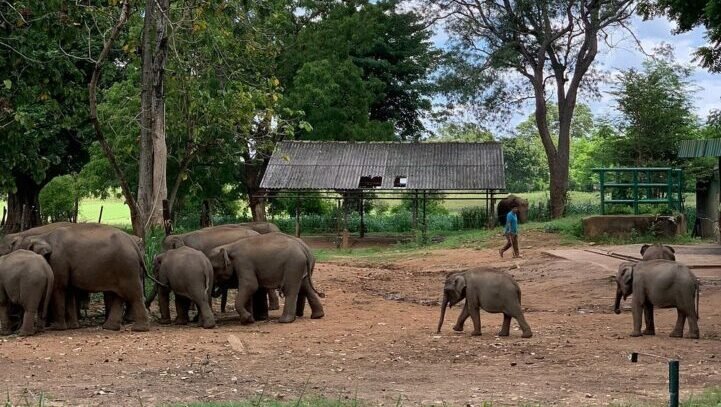
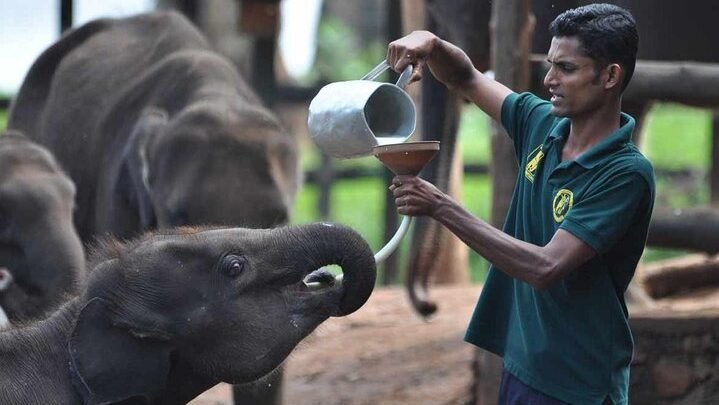
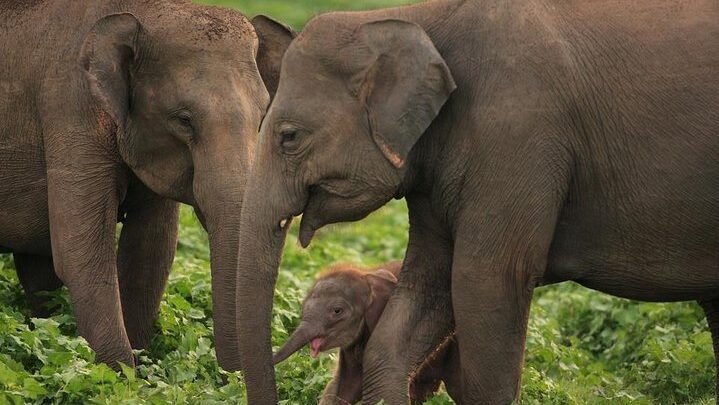
While the National Park is where the giants roam free, the nearby Elephant Transit Home is where their story often begins. Established in 1995, this is one of the world’s most successful rehabilitation centers, dedicated to nursing orphaned elephant calves back to health so they can eventually return to the wild. Each elephant at the ETH has a story—some were found stuck in mud pits, others separated from their herds due to human-elephant conflict. Here, they are provided with medical care and a “surrogate” social group. Once they reach a certain age and physical strength, they are released in groups back into the Udawalawe National Park, where they are monitored as they reintegrate into wild herds.
Unlike many commercial “orphanages,” the ETH follows a strict hands-off policy for visitors. To ensure these calves can survive in the wild, human contact is kept to an absolute minimum. You won’t see riding or bathing here; instead, you witness a professional, conservation-first environment where the elephants’ welfare is the only priority, making a visit to the ETH one of the most ethical things to do in Southern Sri Lanka.
The highlight for any visitor is the feeding hour. From a raised viewing platform, you can watch dozens of boisterous calves—ranging from tiny infants to sturdy adolescents—charge toward the feeding station when the bell rings. Watching their excitement as they jostle for their oversized milk bottles is a moment of pure, unscripted joy.
Standing on the platform and watching these orphans interact—playing, trunk-wrestling, and supporting one another—is a moving experience. It provides a deeper context to your safari; the wild elephant you see later in the afternoon might very well be a former “graduate” of this very home.
Udawalawe: The Realm of the Gentle Giants
If you want to see the Asian Elephant in its most natural, undisturbed state, Udawalawe National Park is where you must go. Created to provide a sanctuary for wild animals displaced by the construction of the Udawalawe Reservoir, this park has become one of the most successful conservation stories in Asia.
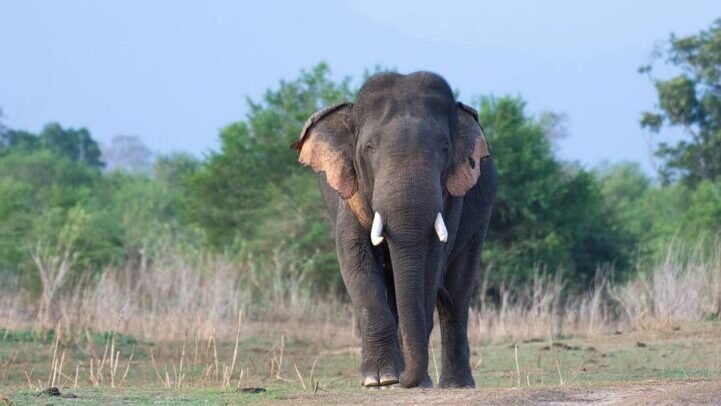
Udawalawe is home to a thriving population of over 600 elephants. Because the park is dominated by tall grasses and low scrub rather than dense forest, sightings are almost guaranteed. It is common to see large herds—mothers, aunts, and playful calves—gathering near the water’s edge. Watching these “gentle giants” interact, bathe, and communicate in the wild is a profound experience that far surpasses any captive encounter. The massive Udawalawe Reservoir acts as the park’s lifeblood. During the dry season, the sight of hundreds of elephants congregating on the lake bed is one of the most spectacular wildlife scenes in the world.
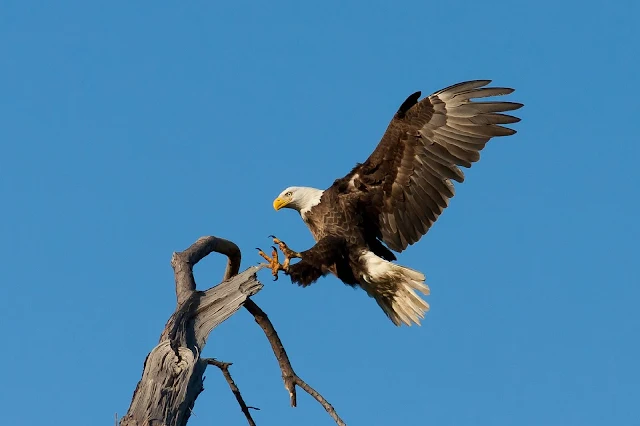
While the elephants are the stars, the park’s dry-zone ecosystem supports a stunning array of life. Keep a sharp eye out for the elusive Sri Lankan Leopard or the Sloth Bear, though they are shy. More common are the herds of Spotted Deer (Sambar), wild boar, and the massive Water Buffalo wallowing in the mud. The park is a critical habitat for raptors. You will see the White-bellied Sea Eagle and the Crested Serpent Eagle circling the thermals above. Near the lagoons, look for the vibrant Painted Stork and the elegant Eurasian Spoonbill.
Unlike some of the busier parks, Udawalawe’s vastness allows for a more respectful distance between vehicles and wildlife. This sense of space ensures that the animals remain calm and the experience feels like a true “exploration” rather than a staged tour.
Ridiyagama Lake: A Symphony of Sunset and Silence
While most travelers head back to their hotels after a safari, those who know the southern interior head toward the serene waters of Ridiyagama Lake. This massive reservoir is not just a source of irrigation for the surrounding emerald rice paddies; it is a thriving ecosystem. What makes Ridiyagama special is the lack of commercial development. There are no rows of safari jeeps here. Instead, you might see a lone fisherman in a traditional wooden boat casting his net into the calm waters, maintaining a way of life that has existed here for generations.
As the sun begins to dip toward the horizon, the lake transforms into a giant mirror. The reflections of the clouds and the darkening sky create a landscape that is a photographer’s dream. Ridiyagama is a vital hub for local and migratory birds. During the late afternoon, you can witness flocks of birds returning to their nesting sites in the trees that emerge from the water. The sound of their calls echoing across the silent lake is a “symphony” you won’t hear in the more crowded parks.
For the traveler who chooses to stay by the lake shore, the experience moves beyond a simple visit. It becomes a deep immersion into the rhythm of the wild south. As darkness falls, Ridiyagama Lake enters its most mysterious phase. The bustling sounds of the day are replaced by a profound, velvety silence, broken only by the rhythmic lapping of the water on the shores. Spending the night here, under a sky largely free from light pollution, offers a view of the Milky Way that feels close enough to touch. The lake itself becomes a dark mirror, reflecting the stars in its still waters.
There is no alarm clock quite like the sunrise at Ridiyagama. Waking up on the shore, you witness the “Mist of the Morning” as it rises slowly off the water’s surface, illuminated by the first pale pink and gold rays of light. You are greeted by a “Dawn Chorus”—a surge of bird calls as thousands of egrets, kingfishers, and herons begin their morning hunt. Before the heat of the sun takes hold, the air by the lake is crisp and incredibly fresh. Taking a slow walk along the shoreline with a cup of local tea in hand, watching the ripples spread across the glass-like water, provides a sense of clarity and peace that stays with you long after you leave.
For those seeking true serenity away from the coastal crowds, a night spent by the waters of Ridiyagama Lake is an absolute must-include in your personal list of things to do in Southern Sri Lanka.
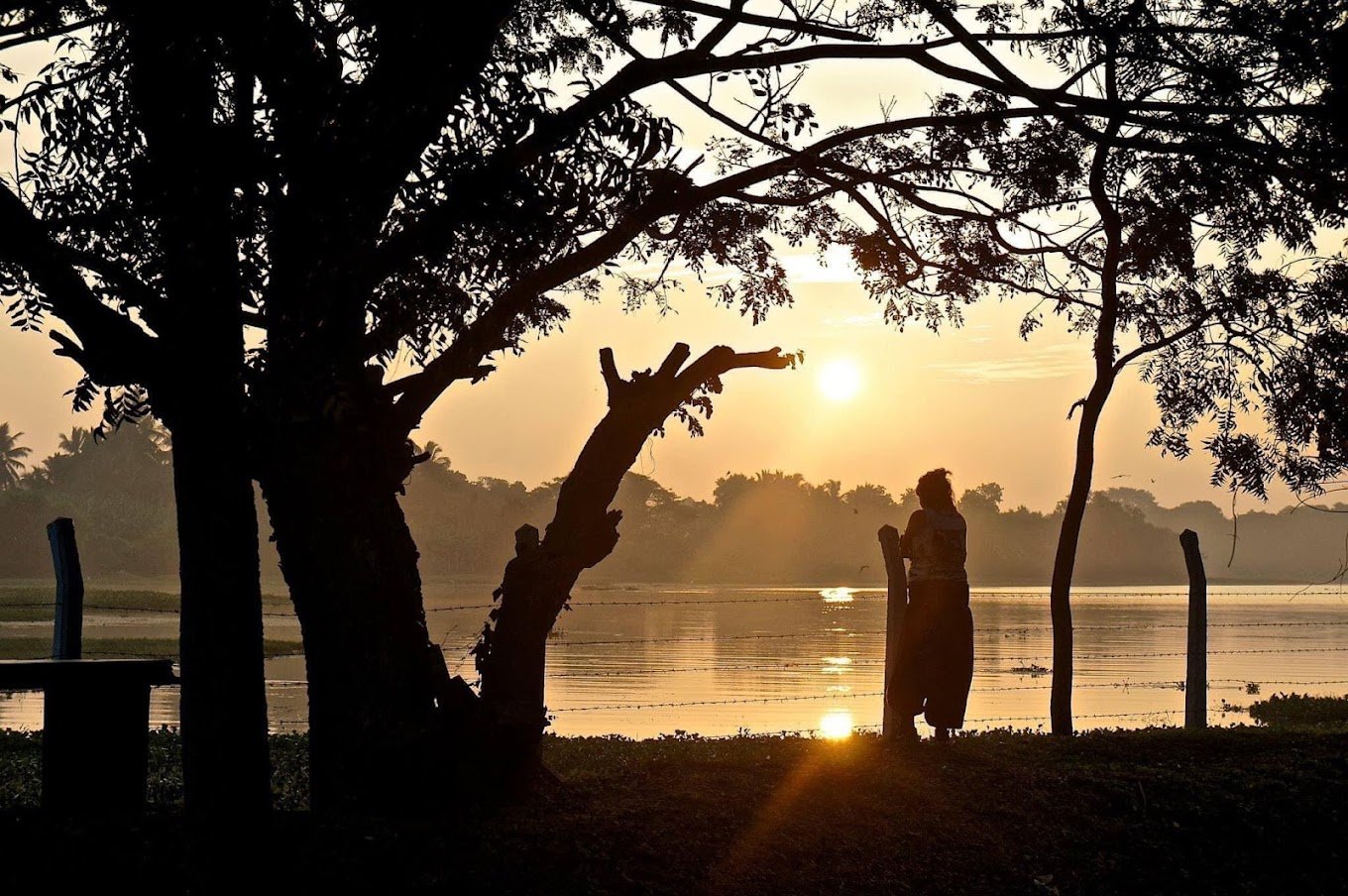
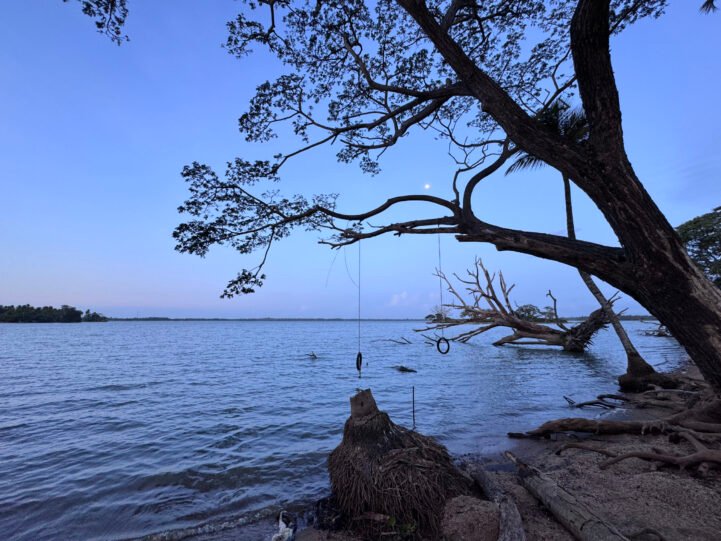
Ridiyagama Lake at twilight
Rekawa: A Moonlight Sanctuary for Ancient Mariners
As your journey moves from the savannas of Udawalawe to the silver-sanded coastline, the focus shifts to one of the most profound wildlife encounters in the world. Rekawa Beach is not your typical tourist shore; it is a vital nesting ground where five of the world’s seven sea turtle species return to fulfill a cycle that has remained unchanged for millions of years.
While nesting happens throughout the year, the nights surrounding the Full Moon (Poya) from January to July offer a particularly ethereal experience. The white sands reflect the moonlight, making the silhouettes of these ancient mariners look like something out of a dream. At Rekawa, the experience begins as the sun sets. Under the soft glow of the moon, you join local conservationists on a quiet night patrol. The atmosphere is one of intense anticipation—waiting in silence for the moment a massive Green Turtle or the rare Leatherback emerges from the crashing surf. Watching a 150kg turtle laboriously haul herself across the sand to dig her nest is a humbling sight. In the presence of specialized red torches (which do not disturb the turtles), you can witness the delicate process of egg-laying. It is a raw, emotional connection to the prehistoric world that happens just feet away from you. While the Green Turtle is the most common visitor, Rekawa is unique because it also hosts Olive Ridleys, Loggerheads, and the critically endangered Hawksbill. Each species brings its own character to the shore, from the massive size of the Green Turtle to the distinctively heart-shaped shell of the Olive Ridley.
What sets Rekawa apart is its commitment to “in-situ” conservation. Unlike many commercial hatcheries that keep turtles in tanks, the Turtle Watch Rekawa project protects the nests exactly where they are laid in the sand. This ensures that the hatchlings’ first journey to the sea is natural, preserving their internal “GPS” so they can one day return to this very beach.
For the true nature lover, a moonlit pilgrimage to Rekawa Beach deserves a permanent spot at the top of your list of things to do in Southern Sri Lanka.
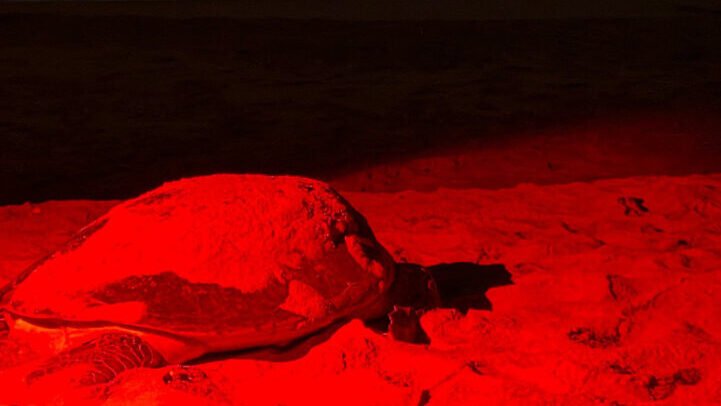
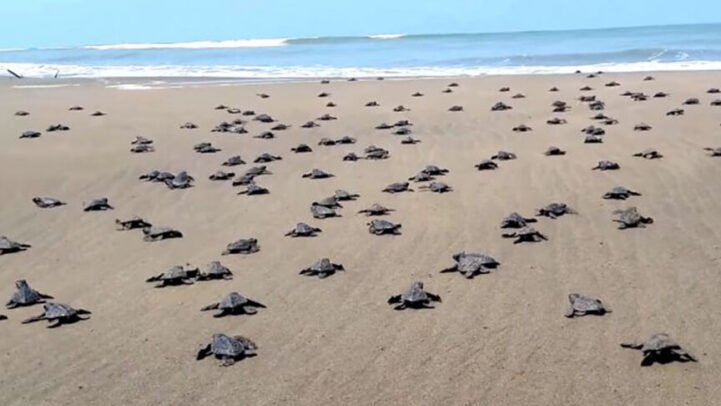
Hatchlings take their fist steps
Kalametiya: The Labyrinth of Lagoons and Mangroves
For those who find peace in the rustle of reeds and the sudden flash of a kingfisher’s wing, Kalametiya is the ultimate destination. Located between the towns of Tangalle and Ambalantota, this sanctuary is far removed from the high-speed boat tours of the more famous wetlands, offering a quiet, paddle-powered exploration of nature.
The best way to experience Kalametiya is by a traditional, hand-paddled boat (oruwa). Because there are no loud motors, you can glide silently through the narrow mangrove channels. This silence allows you to get incredibly close to the wildlife without disturbing the natural rhythm of the lagoon. Kalametiya is a critical stopover for migratory birds and a permanent home to over 150 species. Look for the majestic Black-capped Night Heron, the Glossy Ibis, and the elegant Great Thick-knee standing perfectly still among the marshes. The sanctuary is a haven for kingfishers; you will likely spot the Common, Pied, and Stork-billed varieties darting like blue jewels across the water. The sanctuary is dominated by two massive lagoons—the Lunama and the Kalametiya. As you navigate the water, you are flanked by ancient mangrove forests. These “forests of the sea” act as a vital nursery for fish and shrimp, and their tangled roots provide a safe haven for water monitors and shy purple-faced langurs.
The early morning (around 6:00 AM) is the most rewarding time for true birding enthusiasts. This is when the sanctuary shifts from a quiet landscape into a bustling hub of activity. Gliding through the lagoon at dawn means you are often the first person the wildlife sees that day. The water is often like glass, and the soft, cool air makes the 2-hour paddle feel effortless. It is the best time to spot the more “elusive” species, like the Black Bittern or the Slaty-breasted Crake, before they retreat into the deep shade of the mangroves for the afternoon. As the first light hits the lagoon, the sanctuary’s residents begin their daily search for food. You will see Painted Storks and Pelicans working the shallow waters with surgical precision, while Egrets stand like white statues, waiting for the perfect moment to strike.
A bird-watching tour in the Kalametiya Lagoon is a tranquil masterpiece that belongs on your list of things to do in Southern Sri Lanka.
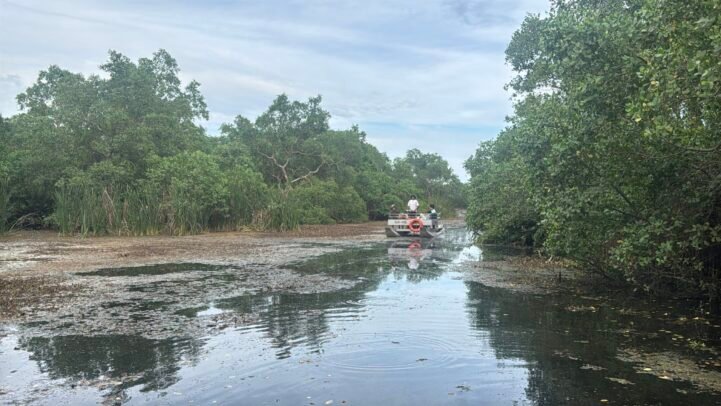
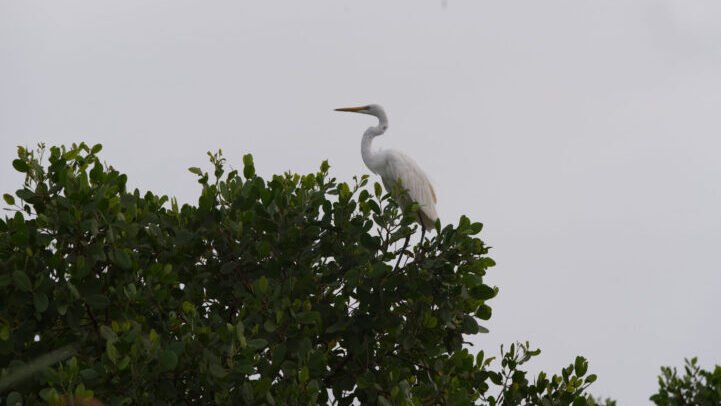
An Egret perched on a tree
Hiriketiya: The Hidden Horseshoe Bay
Hiriketiya is a place where time seems to slow down. Tucked away from the main coastal road, this tiny, emerald-green bay is a paradise for those who want to swap high-rise hotels for high-leaning palm trees and a relaxed “surf-and-soul” atmosphere.
The first thing you notice about Hiriketiya is the greenery. Massive palms and ancient trees fringe the golden sand, providing natural shade that stretches almost to the water’s edge. It feels more like a secluded island in the South Pacific than a typical Sri Lankan beach. The unique shape of the bay creates a rare phenomenon—a gentle, sandy break in the middle for beginners and a powerful, peeling point break over the reef for the more experienced. Whether it’s your first time on a board or you’ve been chasing waves for years, the “Hiri” surf is welcoming and consistent year-round.
As evening approaches, the bay takes on a magical glow. The community gathers on the sand or in the half-dozen rustic cafes that line the shore. Taking a “sunset dip” in the warm, turquoise water while watching the last surfers catch the final waves of the day is a local ritual you won’t want to miss. There are no loud clubs here. Instead, you’ll find wood-fired pizza ovens, low-lit garden bars, and the sound of the ocean. It is the perfect place to grab a fresh coconut, swing in a hammock, and watch the monkeys jump through the canopy above your head while you dig your toes into the sand.
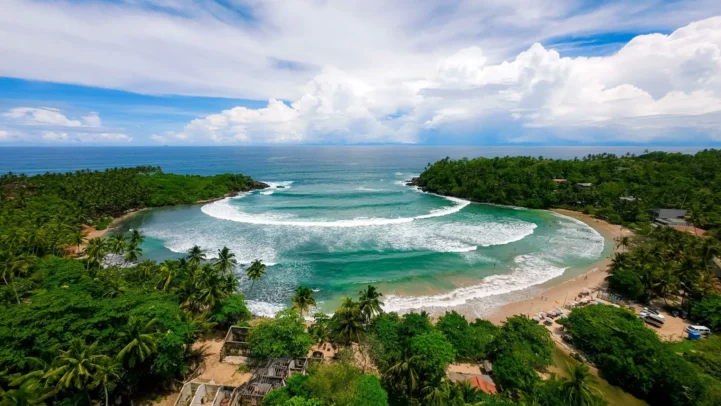
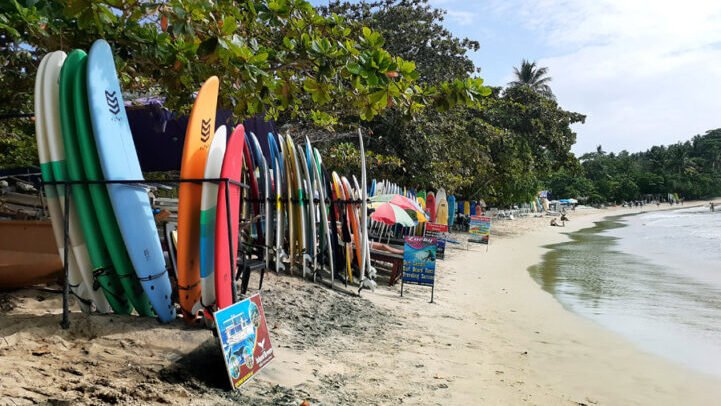
Hiriketiya is a surfer’s paradise
Hummanaya: The Thunder of the Deep
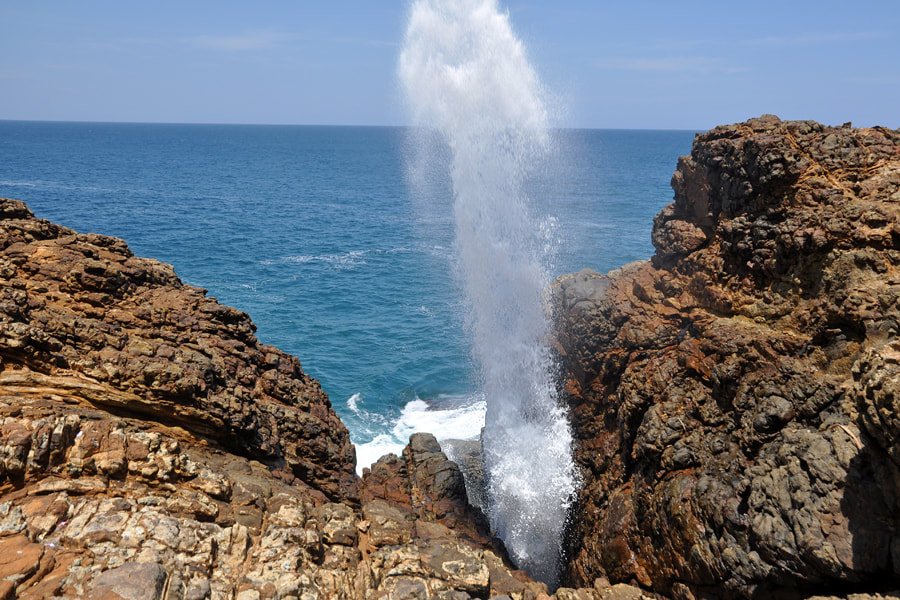
The name “Hummanaya” itself is an onomatopoeia, derived from the booming “hoo” sound that echoes through the cliffs just before the water erupts. It is a raw display of the Indian Ocean’s power, forced through a narrow subterranean fissure.
Deep beneath the rocky cliffs, a long, narrow sea cave has formed over thousands of years. When the massive southern swells roll in, water is forced into this cave under immense pressure. With nowhere else to go, the sea explodes upward through a chimney-like crack in the rocks forming a geological fountain, the second-largest natural blowhole in the world. On a day with strong swells, the spray can reach heights of 25 to 30 meters, drenching the viewing platform in a mist of salt water. Watching the ocean transform from a deep blue swell into a towering white fountain against the bright Sri Lankan sky is a sight that never fails to draw a collective gasp from the crowd.
The journey to the blowhole is part of the experience. You’ll walk through a vibrant local fishing village, where you can see the day’s catch being dried in the sun and small stalls selling “Isso Wade” (spicy prawn cakes) and fresh tropical fruits. It provides a grounded, authentic glimpse into the coastal life of the south.
While it operates year-round, the blowhole is at its most “vocal” and powerful during the Southwest Monsoon (May to September). This is when the sea is at its roughest, providing the energy needed for those record-breaking eruptions.
Dondra Head: Standing at the Edge of the World
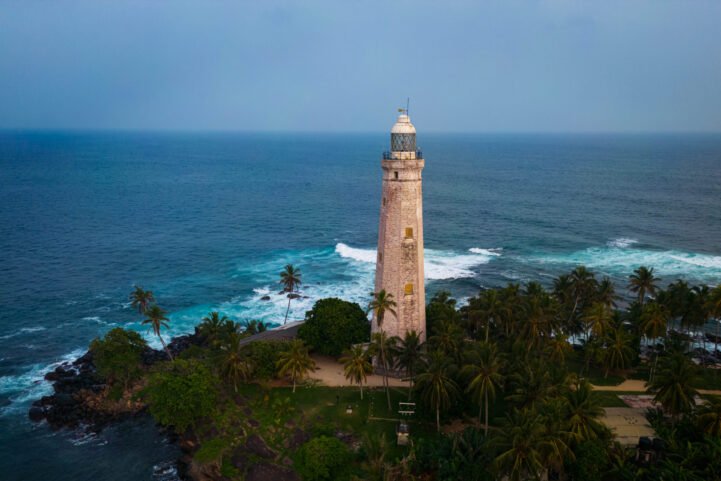
Located on a tapering peninsula just east of Matara, the Dondra Head Lighthouse serves as a sentinel for one of the world’s busiest sea lanes. Standing at 49 meters (161 feet), it is the tallest lighthouse in Sri Lanka and one of the most beautiful in South East Asia. Standing at the base of the tower, you are at the very end of the island. Beyond this point, there is nothing but the vast, deep blue of the Indian Ocean all the way to Antarctica. It is a powerful place for reflection, where the land finally surrenders to the sea.
Built in 1889 with stone imported from Scotland and Cornwall, the lighthouse is a masterpiece of colonial engineering. Its brilliant white octagonal tower stands in stark contrast to the deep green of the surrounding coconut groves and the vibrant yellow of the sunflowers that often bloom nearby. The lighthouse is set within a meticulously maintained garden of swaying coconut palms. This “palm forest” creates a frame for the tower, making it one of the most photographed spots in the country. The sound of the wind through the fronds and the rhythmic crashing of waves against the rocky shore create a peaceful, meditative atmosphere.
As night falls, the lighthouse sends out a powerful beam that can be seen for 28 nautical miles. Watching the light sweep across the dark horizon, signaling to the giant cargo ships passing far out at sea, connects you to Sri Lanka’s ancient history as a vital hub on the maritime Silk Road.
Best Things to Do in Southern Sri Lanka—The South You Never Knew
The South of Sri Lanka is often reduced to a handful of surf breaks and colonial forts. But as we have explored—from the misty heights of Gongala and the ancient stone steps of Elamaldeniya to the moonlit sands of Rekawa—the true heart of the region lies in its “off-the-beaten-path” treasures. Whether you are seeking the adrenaline of a Sinharaja trek or the meditative silence of a night by Ridiyagama Lake, these locations offer a connection to the land that a standard tour simply cannot provide. The “Alternative South” is waiting; all you have to do is take the first step inland.
Don’t Miss These Best Things to Do in Southern Sri Lanka. The Southern Loop is a bespoke 9-day journey that connects location in this guide with private transport and expert local insight